Source 20V Cordless Hammer Drill with Speed Control for DIY, Industrial, and Building
Explore 30 listings of the 20V Cordless Hammer Drill with Speed Control designed for DIY, industrial, and building applications. Buyers can compare specifications such as brushless motor types, battery voltage, and drilling capacities to find the right tool.
Key considerations
Products List
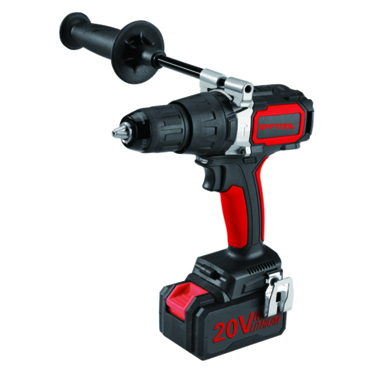


20V Brushless Power Hammer Drill Hammer Function 50n. M with Dual Battery Kit
$17.61 - $18.50
MOQ: 500 Pieces


Power Action 20V Cordless Tools 13mm Cordless Rotary Hammer with Drill Bits
$26.00 - $35.00
MOQ: 5 Pieces


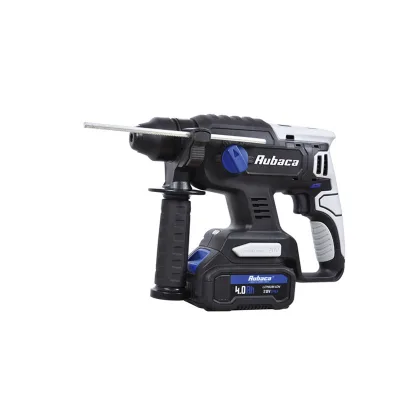
Brushless Portable Cordless Rotary 20V Hammer Lithium Power Tools Hammer Dril
$127.00 - $131.70
MOQ: 10 cartons


20V 1400rpm Lithium Battery Cordless Electric Drill Brushless Impact Hammer
$27.31 - $34.50
MOQ: 2 Pieces


Professional Brushless 20V Cordless Rotary Hammer with High Impact Energy
$45.00 - $55.00
MOQ: 500 Pieces

Comprehensive Sourcing Guide
Strategic Sourcing Guide for 20V Cordless Hammer Drills with Speed Control
Understanding the Core Technical Architecture
When sourcing a 20V Cordless Hammer Drill with Speed Control, the primary objective is to identify tools that balance power density with operational versatility. The market data indicates a specific subset of products that align with these requirements, characterized by a nominal voltage of 20V, often operating within a range up to 21V DC. The power source is consistently identified as a Lithium Battery, which provides the necessary energy density for professional and industrial applications. A critical differentiator in this category is the motor type; high-performance units utilize a Brushless Motor. This technology eliminates the friction and wear associated with traditional brushed motors, resulting in higher efficiency, longer lifespan, and reduced maintenance costs for the end-user.
The mechanical specifications reveal a diverse range of capabilities within the 20V class. Observed data points to a maximum drilling diameter of 13mm for steel, though some configurations support capacities up to 16mm in steel and 45mm in wood. The no-load speed varies significantly depending on the specific model configuration, with observed ranges spanning from 0-450 RPM to 0-1450 RPM, and specific single-speed variants reaching up to 2700 RPM. The inclusion of a speed control function is a mandatory feature for this keyword, allowing operators to adjust the rotational speed to match the material being drilled, thereby preventing material damage and ensuring precision. The drill shape is predominantly round, and the impact drill structure is typically ball-type, which is essential for delivering the hammering action required for masonry work. The classification of these tools often falls under "Hammer Drill" or "Hand Drill," with applications explicitly listed for building and industrial sectors.
Performance Specifications and Operational Capabilities
The operational efficiency of a 20V cordless hammer drill is heavily dependent on its torque output and speed regulation. In the observed product set, the maximum torque is recorded at 50 N*M, a figure that suggests suitability for demanding tasks such as drilling into concrete or driving large fasteners. The battery capacity is a critical component of the power delivery system, with a standard capacity of 2.0Ah observed in the dataset. This capacity, paired with a 20V DC output, ensures a reasonable runtime for continuous operation. The charging system is equally important; the charger input typically accepts a wide voltage range of 100-240V AC, making the tool compatible with international power grids. The charger output is specified as 20V DC at 0.75A, with a maximum charge time of 3 hours.
Speed control functionality is not merely an accessory but a core performance driver. The ability to modulate speed allows for the "Flat Drill Function" observed in certain models, which may be utilized for specific finishing tasks or controlled drilling in sensitive materials. The bore diameter specifications vary, with observations of 22mm and 26mm bore diameters in different contexts, though the primary drilling capacity for the tool itself remains focused on the 13mm to 16mm range for steel. The weight of these units is generally around 2kg, a factor that influences user fatigue during extended periods of use. The classification as "DIY" and "Industrial" grade indicates that these tools are designed to bridge the gap between light-duty consumer use and heavy-duty professional application. The condition of the products is consistently listed as "New," and the customization options are available, allowing buyers to tailor the tool to specific brand or functional requirements.
Compliance, Certification, and Safety Standards
Navigating the compliance landscape for power tools requires a rigorous verification process, as the market contains a mix of certified and non-certified products. While the supplied data mentions "CE" as a background certification, it is categorized as low-confidence and should not be assumed as a standard feature for every listed product. Buyers must treat certification status as a variable that requires direct confirmation from the supplier rather than an inherent attribute of the 20V cordless hammer drill category. The absence of a specific certification in the product listing does not necessarily indicate non-compliance, but it does necessitate a request for documentation.
Safety standards for electrical tools are paramount. The charger input specification of 100-240V AC suggests a design intended for global use, but the actual safety of the electrical system depends on adherence to international standards such as IEC 60745 for hand-held motor-operated electric tools. The "OEM support" attribute for brand names indicates that many suppliers offer white-label solutions, which means the final product's compliance status may depend on the specific brand or the region of sale. Buyers should verify that the lithium battery used meets safety standards for transport and operation, as these are high-energy-density components. The "Customized" attribute implies that the tool can be modified, but any modifications must be validated against safety regulations to ensure they do not void compliance or create hazards.
Cost Drivers and Pricing Dynamics
The pricing for 20V cordless hammer drills with speed control is influenced by a complex interplay of factors, including motor technology, battery capacity, and packaging. The observed price range in the market is between $10 and $131.7 USD. This wide disparity suggests that the lower end of the spectrum likely represents basic models with brushed motors, lower battery capacities, or minimal packaging, while the higher end reflects brushless motor technology, higher torque ratings, and premium packaging solutions. The weight of the unit, at 2kg, is a standard metric, but the cost per kilogram can vary based on the materials used in the housing and the internal components.
Packaging plays a significant role in the final cost and perceived value. The dataset shows a variety of packaging types, including "Color Box," "BMC," and "Carton." The "Color Box" is often associated with retail-ready products and may carry a higher price point due to the marketing value it provides. The "BMC" (Bamboo/Molded Composite) packaging might be used for more industrial or bulk shipments. The dimensions of the packaging, such as 17.523.512 CM or 25257 CM, also impact shipping costs, which is a critical consideration for international buyers. The "Customization" availability allows for branding and packaging modifications, which can add to the unit cost but may reduce long-term marketing expenses for the buyer. The MOQ (Minimum Order Quantity) ranges from 1 to 500 units, offering flexibility for both small-scale testers and large-volume distributors.
Supplier Evaluation and Manufacturing Origins
The geographic origin of these tools is a key indicator of supply chain reliability and manufacturing capability. The data consistently points to Zhejiang, China, as the place of origin. This region is a major hub for power tool manufacturing, offering a mature ecosystem of suppliers, component manufacturers, and logistics providers. The "OEM support" attribute confirms that many suppliers in this region are capable of producing tools under a buyer's brand name. When evaluating suppliers, buyers should look for those who can demonstrate a track record of consistent quality in the "New" condition category and who can provide the "Customized" options required for their specific market.
The classification of the tool as "DIY" or "Industrial" grade is a useful filter for supplier selection. Suppliers specializing in "Industrial" grade tools are more likely to have the quality control processes necessary to produce reliable brushless motors and robust gearboxes. The "Easy to Use" attribute, while subjective, suggests a focus on ergonomics and user experience, which can be a differentiator in a crowded market. Buyers should verify the supplier's ability to maintain the "Speed Control Function" and "Flat Drill Function" across large production runs. The "Impact Drill Head" being "Adjustable" or "Impact Drill" type indicates a level of mechanical sophistication that requires precise manufacturing tolerances.
Quality Control and Long-Term Procurement Strategy
Implementing a robust quality control (QC) strategy is essential for mitigating the risks associated with sourcing power tools from international markets. Given the variability in specifications, such as the different no-load speeds (0-450/0-1450 RPM vs. 2700 RPM) and bore diameters (22mm vs. 26mm), buyers must establish clear acceptance criteria before production begins. The "Brushless Motor" is a high-value component that should be tested for efficiency and durability. The "Ball-type" impact structure should be inspected for wear resistance and smooth operation.
Long-term procurement considerations extend beyond the initial purchase price. The "Charge Time Max" of 3 hours and the "Battery Capacity" of 2.0Ah are critical for user satisfaction and tool uptime. Buyers should negotiate for spare parts availability, particularly for the battery and charger, to ensure the longevity of the product line. The "Customization" option allows for future-proofing the product line, enabling the buyer to adapt the tool to new market demands without changing the core supplier relationship. The "Condition: New" and "Applications: Building and Industrial" suggest that the tool is designed for durability, but this must be validated through sample testing and field trials.
Comparative Analysis of Product Variants
To facilitate decision-making, the following table compares key attributes observed in the 20V cordless hammer drill market based on the supplied data. This comparison highlights the diversity in specifications that buyers must navigate.
| Attribute | Variant A (High Performance) | Variant B (Standard/Industrial) | Variant C (Compact/DIY) |
|---|---|---|---|
| Motor Type | Brushless Motor | Brushless Motor | Brushless Motor |
| Voltage | 20V / 21V DC | 20V | 20V |
| No-Load Speed | 0-450/0-1450 RPM | 2700 RPM | 1400 RPM |
| Max Torque | 50 N*M | Not Specified | Not Specified |
| Drilling Capacity | 16mm (Steel) / 45mm (Wood) | 13mm | 13mm |
| Battery Capacity | 2.0Ah | 2.0Ah | 2.0Ah |
| Packaging | Color Box / BMC | Color Box | BMC |
| Speed Control | With Speed Control Function | With Speed Control Function | With Speed Control Function |
| Impact Structure | Ball-type | Ball-type | Ball-type |
| Origin | Zhejiang, China | Zhejiang, China | Zhejiang, China |
This table illustrates that while the core technology (Brushless Motor, 20V, Speed Control) is consistent, the performance metrics vary significantly. Buyers must align these specifications with their specific application requirements. For instance, a variant with a 2700 RPM no-load speed may be ideal for high-speed drilling in wood, while a variant with adjustable speed (0-450/0-1450 RPM) is better suited for precision work or driving screws. The packaging differences also suggest that Variant A and B are targeted at different market segments, with Variant A potentially being more retail-focused due to the "Color Box" option.
Final Procurement Recommendations
Sourcing a 20V Cordless Hammer Drill with Speed Control requires a methodical approach that prioritizes technical verification over marketing claims. The observed data confirms that the market offers a wide range of options, from basic DIY tools to advanced industrial machines. Buyers should focus on verifying the "Brushless Motor" authenticity, the "Speed Control Function" reliability, and the "Battery Capacity" consistency. The "OEM support" and "Customization" options provide significant flexibility, but they also require careful management of quality standards. By leveraging the specific technical details provided, such as the 50 N*M torque and 2.0Ah battery capacity, buyers can make informed decisions that align with their operational needs. The geographic concentration in Zhejiang, China, offers a robust supply chain, but the variability in specifications necessitates a rigorous sample testing and quality control protocol to ensure the final product meets the buyer's expectations for performance and durability.
FAQs
What motor type is standard for these drills?
The standard motor type is a Brushless Motor, which offers higher efficiency and longer lifespan. This design eliminates friction and wear found in brushed motors, making it suitable for industrial applications and reducing maintenance costs for professional users.
How much torque can these drills deliver?
The maximum torque recorded for these units is 50 N*M. This level of torque supports demanding tasks such as drilling into concrete or driving large fasteners, ensuring the tool meets the needs of building and industrial sectors.
Can the speed be adjusted during operation?
Yes, the tool includes a Speed Control Function to adjust rotational speed. This feature allows operators to match the speed to the material being drilled, preventing damage and ensuring precision during tasks like flat drilling or masonry work.
What is the battery voltage and capacity?
The battery operates at a maximum of 21V DC with a capacity of 2.0Ah. This power source provides sufficient energy density for continuous operation, paired with a charger that accepts 100-240V AC input for global compatibility.
Which drilling capacities are supported for steel?
The maximum drilling diameter for steel is 13mm, with some configurations supporting up to 16mm. These capacities define the tool's ability to handle various construction materials while maintaining the structural integrity required for DIY and industrial grade applications.
How long does it take to fully charge the battery?
The maximum charge time is 3 hours using the provided charger. The charger outputs 20V DC at 0.75A, ensuring the 2.0Ah battery is replenished efficiently for the next round of building or industrial tasks.
Is customization available for branding and packaging?
Customization is available for both branding and packaging options. Buyers can request OEM support for brand names and choose from packaging types like Color Box or BMC, allowing for tailored solutions that meet specific market requirements.